
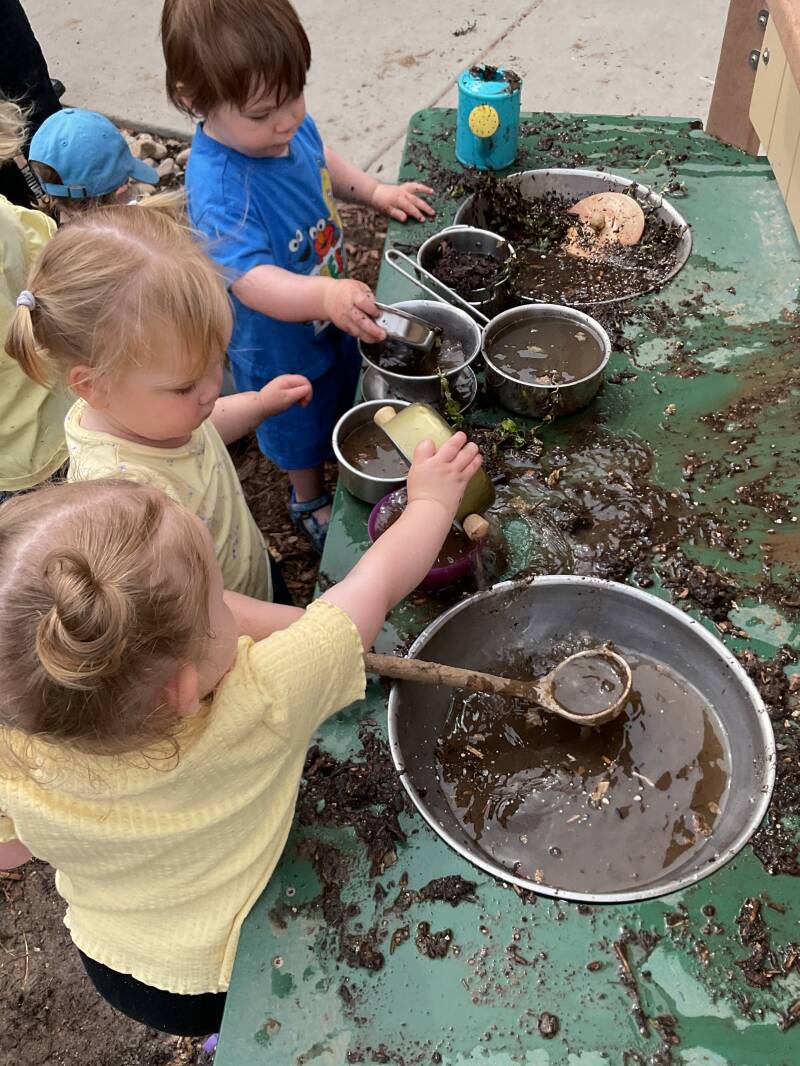
If you've walked by The Children's Garden this week, you have likely heard the sounds of laughter, joy and wonder from kiddos playing in the mud kitchen.
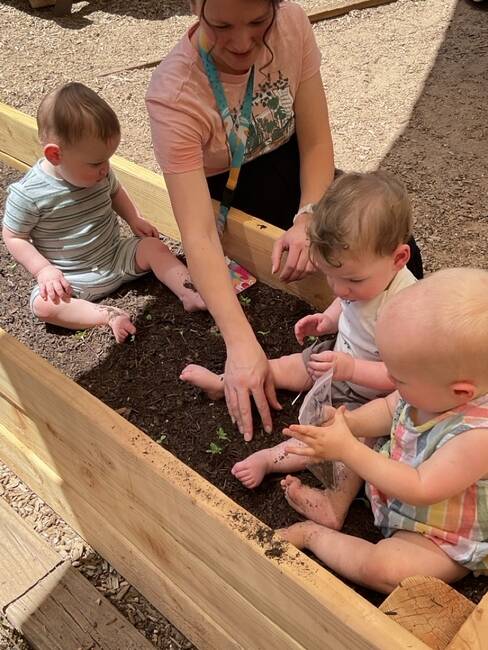
Engaging with the earth in this way has many benefits. In garden class, if we get dirty we say, "It's no big deal!" In reality, access to mud and nature play is a big deal for child development. Recent research has shown that touching the microorganisms in soil actually help boost a child's immune system, which is extra beneficial in this critical period of development. That's to say that playing in soil as a child can boost their immune system for life. Brain development is supported when a children experiences a rise in oxycodone from engaging with the mud, which helps create new neuro pathways.
Playing outside and directly with dirt helps build a foundation for the value of Tikkun Olam. Because children are directly engaging with the earth, they are forming a deeper relationship with the earth and their place on the planet. To help repair the world, we need to have empathy for the world. Fostering a relationship to place during childhood development creates a meaningful impact on how they will care for the world as adults.
Our mud kitchen also provides endless opportunity for imaginative play. Students have been cooking soup, cake, salsa, and more. They've also been playing house and engaging in social play. Playing together in the mud kitchens helps students learn to navigate social conflicts. We practice asking for a turn with a material, checking in on friends when they're hurt or upset and how to ask for help. Throughout the year, we will extend our mud kitchen play to continue the deep learning.
For more info on the importance of nature play, check out these books:
Balanced and Barefoot: How Unrestricted Outdoor Play Makes for Strong, Confident and Capable Children by Angela J Hanscom
Hunt, Gather, Parent: What Ancient Cultures Can Teach Us about the Lost Art of Raising Happy, Healthy Children by Michaeleen Doucleff
Beyond The Front Door: Embracing Nature for a Happier and Healthier Family by Josee Bergeron
Add comment
Comments